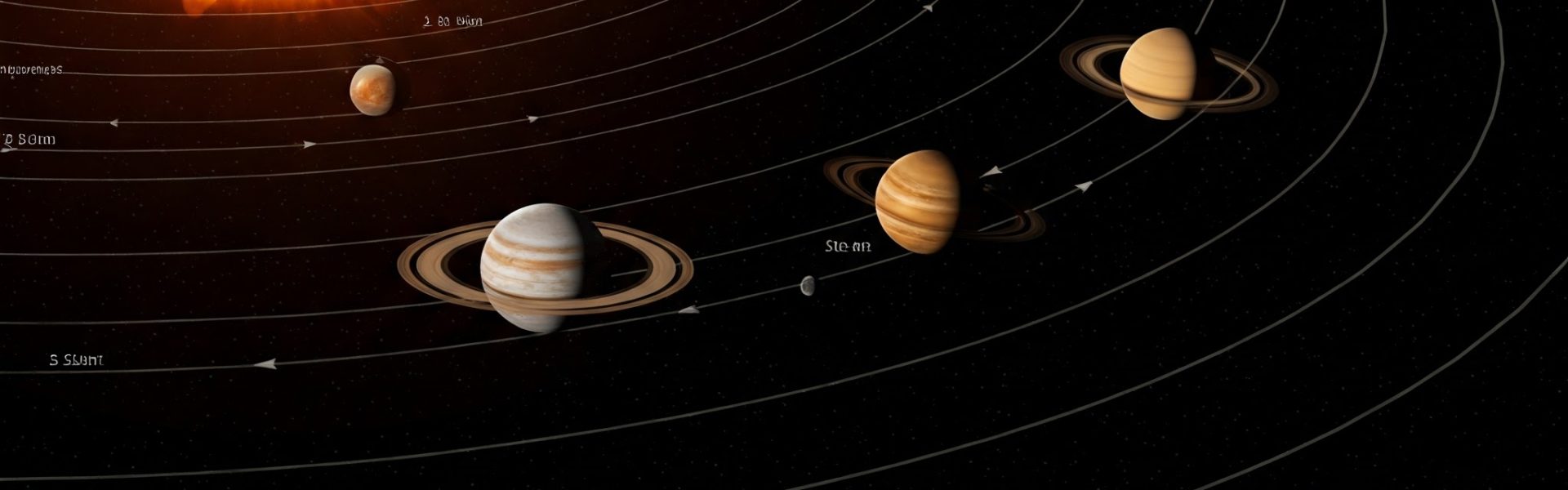

The Sun: Our Star of Life and Doom
The Sun, the central star of our Solar System, is not only the source of light and heat without which life on Earth would be impossible, but also a fascinating object of study for astronomers. Its characteristics place it in a strictly defined category of stars.
The Beginnings of Sun Perception:
Since the dawn of time, the Sun has played a crucial role in human life. Many ancient cultures considered it a deity or a supernatural phenomenon.
- Antiquity: It was believed that the Earth was flat and located at the center of the universe, with the Sun orbiting it. Night was explained by the Sun hiding behind mountains or under the Earth.
- Ancient Greece: The first hypotheses about a heliocentric model of the universe appeared, in which the Earth orbits the Sun, but they did not gain widespread acceptance.
- Middle Ages: The geocentric model of the universe prevailed, and the Sun was mainly perceived in a religious context. During this period, the physical nature of the Sun and phenomena such as electromagnetic radiation were not yet known.
- Renaissance: Nicolaus Copernicus published his revolutionary work „De revolutionibus orbium coelestium” (On the Revolutions of the Heavenly Spheres), 1 in which he proved that the Earth orbits the Sun.
- Modern and Contemporary Times: The development of science and technology has allowed for detailed observations of the Sun, the discovery of its physical properties, radiation, and solar activity phenomena.
The Sun in the Light of Science: - The Sun is a giant ball of plasma that forms the center of the Solar System. Its mass is about 333,000 times greater than the mass of the Earth.
- Spectral and Luminosity Classification of the Sun:
- The Sun is classified as a G2V spectral type star. The letter „G” means that the surface temperature of the Sun is about 5778 Kelvin (about 5505 degrees Celsius). The number „2” in G2 indicates that the Sun is in the middle part of the division within the G type. The Roman numeral „V” informs us about the luminosity class of the star. Class V stars are main-sequence dwarfs, which means that the Sun is in a stable stage of its life, where energy is mainly produced by the fusion of hydrogen into helium in its core. The absolute magnitude of the Sun is 4.83. Its apparent magnitude from Earth is about -26.74, making it the brightest object in our sky.
The Earth-Sun Relationship: Present and Protection: - The Sun emits radiation that is essential for life on Earth, but also potentially harmful. Heat and light reach us, and we also have gravity. Thanks to the Sun, we have day and night, seasons, and plants carry out photosynthesis.
- As a result of thermonuclear reactions, the Sun also emits a stream of charged particles called the solar wind, and sometimes ejects huge clouds of plasma and magnetic fields into space, called coronal mass ejections (CMEs). These phenomena cause geomagnetic storms that disrupt the operation of satellites, power grids, and navigation systems.
- Fortunately, Earth has natural defense mechanisms: the magnetosphere, which deflects most of the charged particles, and the atmosphere, which absorbs harmful radiation, such as UV and X-rays. Without this protection, life on Earth would not be possible.
Heliosphere: The Sun’s Protective Bubble - In addition to the protection provided by Earth, the entire Solar System is surrounded by the heliosphere. It is a kind of „bubble” in space, formed by the solar wind. This wind, flowing out from the Sun, creates a region where matter of solar origin dominates, protecting the planets from most cosmic radiation. The shape and boundaries of the heliosphere are dynamic and depend on the interaction of the solar wind with the interstellar medium.
Seasons and Day and Night: - We owe the seasons to the Earth’s orbit around the Sun in an elliptical path and the tilt of the Earth’s axis of rotation. Day and night are the result of the Earth’s rotation around its own axis.
- Sunspots are cooler areas on the Sun, resulting from disturbances in the Sun’s magnetic field. They appear and disappear in a cycle lasting about 11 years. In 2024, a record number of 337 sunspots were observed, which may affect space weather. The Sun rotates on its own axis, which causes the apparent movement of sunspots from our perspective.
The Sun on a Cosmic Scale: - Our Sun, although huge and powerful to us, is a fairly average star on a cosmic scale. It belongs to the G2V spectral type, the so-called yellow main-sequence dwarfs. There are hundreds of billions of stars in our Galaxy, the Milky Way, and the Sun is just one of them.
- Distances to other stars: The Sun is the closest star to us. The next closest star, Proxima Centauri, is about 4.24 light-years away from Earth. This is a huge distance, but on a cosmic scale, it is close proximity.
- Size of the Sun: The Sun is much larger than the Earth; its diameter is 109 times greater than the diameter of our planet. However, compared to other stars, the Sun is of average size. There are much larger stars, such as red giants or hypergiants, whose sizes can be thousands of times greater than the Sun.
- The Milky Way: The Sun, along with the entire Solar System, orbits the center of the Milky Way, our Galaxy. A full orbit takes about 220 million years.
Unknowns About the Sun: - Although the Sun seems familiar and obvious to us, it still hides many secrets. Science is still seeking answers to fundamental questions about its operation, structure, and impact on its surroundings. The development of technology and space missions provide us with ever newer data, but many phenomena occurring on the Sun remain a mystery to us.