Blackout in Europe on April 28, 2025: Cause, Course, Effects, and Analysis of Comments

1. Executive Summary
On April 28, 2025, a major blackout occurred, affecting the Iberian Peninsula, encompassing a significant part of Spain and Portugal, as well as parts of France.1 The cause of this event was a reported „rare atmospheric phenomenon” originating in Spain, which led to instability in the power grid.1 The blackout caused significant disruptions in transport, communication, critical infrastructure, and the daily lives of citizens.1 Governments, network operators (Red Eléctrica in Spain and REN in Portugal), and the European Commission took immediate action to restore power.3 Public reactions included frustration, anxiety, and speculation about the causes of the event.7 Power was quickly restored, and investigations into the exact cause are ongoing.2
2. Confirmation and Chronology of the Blackout
The blackout occurred on Monday, April 28, 2025, around noon local time in Spain (12:30 CEST) and Portugal (11:30 WEST), which corresponded to approximately 10:30 GMT.1 The main impact was on mainland Spain and Portugal, including major urban centers such as Madrid, Barcelona, Lisbon, and Porto.1 Parts of southern France, especially the Basque Country, experienced short-lived power outages. Andorra also reported a very brief impact. Morocco faced internet connectivity issues, likely due to the outage in Spain.1 The Canary Islands, Balearic Islands, and the territories of Ceuta and Melilla (Spanish territories in North Africa) were not affected due to their independent power systems. The Portuguese island regions of Madeira and the Azores also remained unaffected. Gibraltar, not connected to the European grid, also did not experience a blackout.5 Power restoration began relatively quickly in some areas, with significant progress reported by the evening of April 28. By the morning of April 29, over 99% of Spain’s energy demand had been restored, and Portugal reported a full restoration of power.2
Table 1: Chronology of the Blackout and Power Restoration
| Time (GMT/Local) | Key Events | Affected Region(s) |
| Approx. 10:30 GMT | Start of the blackout | Spain, Portugal, parts of France |
| Approx. 12:30 CEST | Significant drop in grid load in Spain | Spain |
| Late afternoon | Red Eléctrica reports partial power restoration in northern, southern, and western Spain | Spain |
| Evening of April 28 | Approximately 50-60% of power restored in Spain; Portugal reports power for a significant portion of customers | Spain, Portugal |
| Morning of April 29 | Over 99% of energy demand restored in Spain; Portugal reports full power restoration | Spain, Portugal |
3. Causes of the Blackout
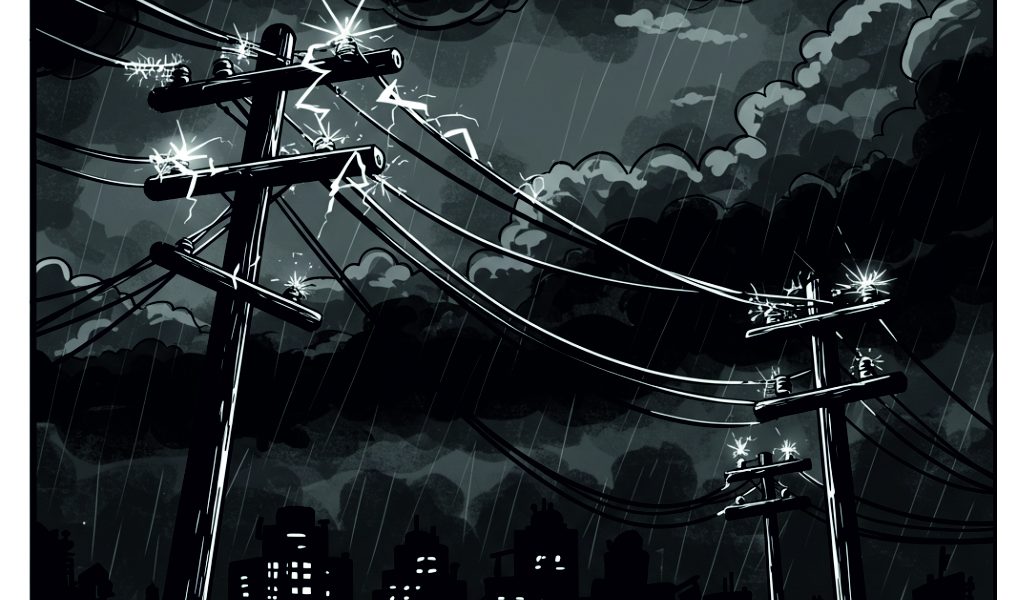
Initially, the Portuguese network operator, REN, attributed the outage to a „fault in the Spanish electricity grid,” and later specified that the cause was a „rare atmospheric phenomenon” caused by extreme temperature variations in the interior of Spain. This led to „anomalous oscillations” in very high voltage lines (400 kV), known as „induced atmospheric vibrations,” causing synchronization failures in the interconnected European network.2 REN’s detailed explanation points to a specific, albeit unusual, cause related to temperature fluctuations affecting the physical infrastructure of high-voltage lines. This explanation suggests a vulnerability to environmental factors that may require further investigation in the context of climate change and grid resilience. The chain of events is as follows: Extreme temperature variations in Spain → Anomalous oscillations in high-voltage lines → Induced atmospheric vibrations → Synchronization failures between electrical systems → Subsequent disturbances in the interconnected European network → Blackout.
Spanish Prime Minister Pedro Sánchez mentioned a „strong oscillation” in the European network and a „strong technical fluctuation,” but stated that the cause was still being determined, emphasizing that no theory had been ruled out. He also noted a sudden drop of 15 gigawatts of electricity (60% of national demand) within five seconds.3 The Prime Minister’s cautious statement and focus on a „strong oscillation” and significant power loss indicate that Spanish authorities were likely considering a broader range of potential causes beyond the atmospheric phenomenon suggested by REN. The scale of the power loss in such a short time suggests a rapid and systemic failure in the grid. The chain of events: Strong oscillation in the European network → Strong technical fluctuation → Sudden loss of 15 GW of electricity (60% of demand in 5 seconds) → Grid instability → Blackout.
The Spanish network operator, Red Eléctrica, confirmed that the outage was „exceptional and extraordinary” and reported a „total blackout” on the Iberian Peninsula due to power flow oscillations of unknown origin, which led to disconnection from the European network. They initially declined to speculate on the exact cause, focusing on power restoration efforts.3 Red Eléctrica’s description of „power flow oscillations of unknown origin” suggests potential internal instability within the Spanish grid that led to its disconnection from the wider European system. This highlights the importance of monitoring grid stability and rapid response mechanisms to manage such events. The chain of events: Power flow oscillation of unknown origin in the Spanish grid → Disconnection from the European network → Collapse of the Iberian electricity network → Total blackout.
Both Spanish and Portuguese authorities, as well as the President of the European Council, stated that there were no indications of a cyberattack as the cause. The Portuguese National Cyber Security Centre also issued a statement denying any signs of a cyberattack.3 The swift and consistent denial of the cyberattack theory by multiple official sources suggests that evidence, at least immediately after the event, did not point to malicious intent. This allows for a focus on technical and environmental factors as more likely causes. However, the fact that investigations were still underway (e.g., by the Spanish National Institute of Cybersecurity – 46) indicates that this possibility was not completely ruled out pending further analysis.
It was initially suggested that a fire in southern France might have been the cause, but the French network operator RTE denied this.5 RTE’s quick dismissal of the fire theory suggests that the blackout was not directly caused by a failure of physical infrastructure in that specific location. This reinforces the idea of a more systemic failure within the Iberian grid. The European Network of Transmission System Operators for Electricity (ENTSO-E) launched an investigation into the event.17 ENTSO-E’s involvement underscores the pan-European significance of understanding the causes of the blackout. Their investigation will likely provide a more detailed and independent analysis of the causes and potential implications for the interconnected European network. Some reports speculated that high electricity demand and challenges in integrating renewable energy sources may have played a role.17 This speculation points to a potential underlying vulnerability related to the evolving energy mix. High demand can strain the grid, and the intermittent nature of some renewable sources can create challenges in maintaining grid stability, especially if not effectively managed with storage and other balancing mechanisms. The chain of events: High electricity demand and/or Challenges in integrating renewable energy sources → Potential grid instability → Increased susceptibility to oscillations or imbalances → Blackout. Experts suggested that the increasing reliance on renewable energy sources with lower grid inertia may increase the system’s vulnerability to oscillations.12 The concept of „grid inertia” is crucial here. Traditional power plants with large rotating masses provide inherent grid stability. Renewable sources like solar and wind often lack this inertia, potentially making the grid more susceptible to rapid frequency changes and oscillations. This suggests a need for technological solutions (e.g., synthetic inertia) and grid management strategies to address this issue as the share of renewables grows. The chain of events: Increasing reliance on renewable energy sources → Lower grid inertia → Greater susceptibility to oscillations and frequency changes → Grid instability → Blackout. The possibility of a technical failure in the network was also considered.11 A technical failure, such as damage to a major component or transmission line, is a more traditional cause of blackouts. While the atmospheric phenomenon is a novel explanation, the possibility of a technical failure contributing to or initiating the outage should not be dismissed in the investigation. One report mentioned a „serious imbalance” causing the Spanish grid to disconnect from the European system.7 An imbalance between electricity production and consumption is a fundamental trigger for grid instability. This could have been caused by a sudden loss of production (as noted by the Prime Minister) or an increase in demand that the system could not meet. The disconnection of the Spanish grid suggests that the imbalance became too severe for the interconnected system to handle, leading to an automatic protective measure.
4. Course and Scope of the Blackout
The blackout occurred suddenly, with the Spanish grid losing a significant amount of power (15 GW) within seconds.2 The speed of the power loss indicates a cascading failure or a very sudden triggering event in the grid. This rapid collapse must have overloaded protection systems in many areas, leading to a widespread outage. The main impact was on mainland Spain and Portugal. Parts of southern France and Andorra experienced short-lived power outages. Morocco faced internet problems.1 The geographical scope confirms that the interconnected power grid of the Iberian Peninsula was the center of the problem. The short-term effects in neighboring regions highlight the interconnections of the European power system, where disruptions in one area can spread, albeit with varying intensity, to others. Internet problems in Morocco, likely due to dependence on Spanish infrastructure, show the cascading effects beyond just electricity supply. Data from ENTSO-E showed a significant drop in grid load in Spain, from approximately 25,000 MW to below 12,000 MW within 30 minutes. Electricity production from various sources (nuclear, hydro, fossil fuels, wind, solar) also decreased significantly. Portugal experienced a similar pattern. The French system remained stable.45 ENTSO-E data provides concrete evidence of the scale and speed of the power system collapse in both Spain and Portugal. The simultaneous reduction in production across all sources suggests that the problem was not limited to a specific type of power plant but was rather a systemic grid failure that forced widespread shutdowns, either automatically or due to lack of demand. The stability of the French system despite the incident in its neighbor indicates effective separation or resilience mechanisms in place. Power restoration began relatively quickly, with Red Eléctrica reporting partial power restoration in northern, southern, and western Spain within hours. Electricity was drawn from France and Morocco to aid in the restoration. Portugal also initiated phased power restoration plans, prioritizing essential services.2 The rapid commencement of repair efforts and reliance on external power sources (France and Morocco) demonstrate the existence of established protocols and international cooperation mechanisms for such emergencies. Prioritizing essential services like hospitals is a standard procedure to mitigate the most severe consequences of a blackout. By late Monday, Spain had restored approximately 50-60% of its power. Portugal reported the return of power for a significant portion of its customers. By Tuesday morning, both countries reported near-complete or complete restoration of electricity supplies.2 The relatively quick restoration of power indicates the effectiveness of repair procedures and the resilience built into the power grid infrastructure, despite the initial widespread failure. However, the initial hours of widespread outage would still have caused significant disruptions and economic impacts.
5. Effects and Impact
Hospitals relied on backup generators to maintain essential services, with some suspending non-urgent procedures.3 The activation of backup generators in hospitals prevented a complete collapse of healthcare services, highlighting the importance of such reserves for critical infrastructure. However, the suspension of non-urgent procedures would still have affected patient care and hospital operations. Nuclear power plants in Spain were automatically shut down as a safety measure due to the loss of grid power.5 The automatic shutdown of nuclear power plants demonstrates safety protocols designed to prevent accidents during grid failures. However, it also meant that a significant portion of Spain’s generating capacity was temporarily unavailable, exacerbating the energy shortage during the blackout. Oil refineries in Spain halted operations.12 The shutdown of oil refineries would have economic consequences for fuel supplies and industrial production, although the short duration of the blackout likely limited the long-term impact. Water supplies may have been disrupted on higher floors due to non-functioning electric pumps.29 This highlights a less obvious but potentially significant impact on basic utilities, especially in urban areas with tall buildings.
Table 2: Impact on Key Sectors
| Sector | Specific Effects | Snippet ID |
| Critical Infrastructure | Hospitals relied on backup generators, non-urgent procedures suspended; Spanish nuclear power plants automatically shut down; oil refineries halted operations; potential disruptions to water supply | 3 |
| Transport | Metro and rail services stopped, thousands of passengers evacuated; traffic lights ceased functioning, causing traffic jams; flight delays and cancellations, some airports closed | 1 |
| Communication | Mobile phone network outages, especially voice calls; significant disruptions to internet connectivity, reduced speeds and increased latency; ATMs and card payment systems not working | 2 |
| Daily Life of Citizens | Millions without power, disruptions in homes, businesses, and services; Madrid Open tennis tournament suspended; people trapped in elevators, garages, and metro tunnels; businesses closed or operating with limitations, difficulties with payments and accessing cash; significant disruption to daily routines | 1 |
6. Analysis of Public Comments
Public comments were observed on social media platforms (such as X/Twitter, Instagram), online forums (such as Reddit, Overclockers UK, MyCarForum), and websites with comment sections.2 Many users reported their direct experiences with the blackout, including being stuck on public transport, trapped in elevators, or unable to use electronic devices or payment methods. Surprise and frustration at the sudden and widespread nature of the outage were common.3
A major concern was the unknown cause of the blackout, leading to widespread speculation. Rumors of cyberattacks or sabotage initially circulated, although authorities quickly denied them.3 Concerns were raised about the immediate impact on transport, communication, access to basic services, and overall safety. People shared difficulties in getting home, contacting loved ones, and coping without electricity.3 Some commentators raised concerns about the vulnerability of European power grids, especially in light of the increasing reliance on renewable energy sources. The incident was seen as a reminder of the need for robust infrastructure and preparedness for such events.2 Some users compared this event to previous blackouts in Europe and other parts of the world, discussing potential causes and lessons learned.9 Despite official denials, speculation about cyberattacks or other malicious causes persisted in online discussions.3 Some users reacted to the situation with humor, sharing anecdotes and jokes about the blackout.9
7. Official Statements and Reports
The Spanish Prime Minister addressed the nation, emphasizing the unprecedented nature of the blackout and assuring that all resources were being allocated to restore power. He urged citizens to limit travel and use mobile phones responsibly. A state of emergency was declared in Spain, and the military was mobilized to distribute generators and other materials. Emergency cabinet meetings were convened in Spain and Portugal.3 The Portuguese Prime Minister stated that the problem likely originated in Spain and that there were no signs of a cyberattack. An emergency government meeting was convened.3 The US Embassy in Spain issued a warning to US citizens about the widespread power outage, advising caution and monitoring local news.39
Table 3: Summary of Official Statements
| Organization/Person | Key Statement/Finding | Snippet ID |
| Spanish Prime Minister | Unprecedented nature of the blackout; all resources allocated to restore power; call to limit travel and responsible use of phones; declaration of a state of emergency | 3 |
| Portuguese Prime Minister | Problem likely originated in Spain; no signs of a cyberattack; emergency government meeting convened | 3 |
| Red Eléctrica (Spain) | Confirmation of „total blackout”; estimated restoration time of 6-10 hours; described the event as „exceptional and totally extraordinary”; activated emergency plans; reports of progress in power restoration | 3 |
| REN (Portugal) | Attributed blackout to a „rare atmospheric phenomenon” in Spain, causing oscillations in high-voltage lines and synchronization failures; initiated „black start” operation; prioritized power restoration for essential services; possible full normalization time up to a week | 2 |
| European Commission | Contact with Spanish and Portuguese authorities and ENTSO-E to understand causes and effects; emphasized the existence of system restoration protocols; no signs of a cyberattack | 3 |
| ENTSO-E | Brief statement confirming a serious incident in the power systems of Spain and Portugal, leading to a blackout; ongoing power restoration efforts; publication of a bidding zone study on the same day (unrelated to the incident) | 3 |
8. Conclusions
On April 28, 2025, a significant blackout occurred, affecting Spain and Portugal, with minor effects in neighboring regions. The initially reported cause was a „rare atmospheric phenomenon” leading to grid oscillations, although Spanish authorities were more cautious about the exact origin of the failure. There were widespread disruptions to critical infrastructure, transport, communication, and the daily lives of millions of citizens. Governments and network operators responded quickly, restoring power, with near-full restoration achieved by the next day. Public reaction was characterized by initial frustration and anxiety, followed by speculation and discussions about energy security. Relevant authorities, including ENTSO-E, are conducting investigations to fully understand the causes of this unprecedented blackout and to implement measures to enhance the resilience of the European power grid.
This event highlights the vulnerability of even advanced power grids to unexpected events, both natural and technical. The increasing reliance on interconnected power systems means that a localized problem can have widespread consequences, underscoring the need for robust synchronization and stability mechanisms. The debate about the role of renewable energy sources in grid stability requires further attention and investment in technologies and infrastructure that can ensure reliable supply. The effectiveness of crisis response protocols and cross-border cooperation in the rapid restoration of power is a positive aspect, but preventing such widespread outages should be a priority. This incident serves as a reminder for individuals, businesses, and critical infrastructure providers to have contingency plans in place for power outages, including backup power and communication systems.
Europe blackout Power outage Spain Portugal April 28 2025 Cause Effects Public comments Grid failure Energy security